-
Courses

Courses
Choosing a course is one of the most important decisions you'll ever make! View our courses and see what our students and lecturers have to say about the courses you are interested in at the links below.
-
University Life

University Life
Each year more than 4,000 choose University of Galway as their University of choice. Find out what life at University of Galway is all about here.
-
About University of Galway

About University of Galway
Since 1845, University of Galway has been sharing the highest quality teaching and research with Ireland and the world. Find out what makes our University so special – from our distinguished history to the latest news and campus developments.
-
Colleges & Schools
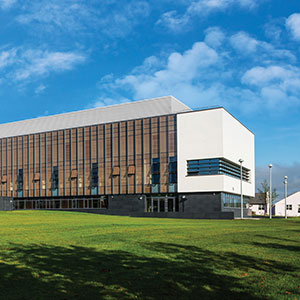
Colleges & Schools
University of Galway has earned international recognition as a research-led university with a commitment to top quality teaching across a range of key areas of expertise.
-
Research & Innovation

Research & Innovation
University of Galway’s vibrant research community take on some of the most pressing challenges of our times.
-
Business & Industry
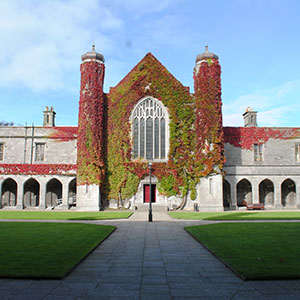
Guiding Breakthrough Research at University of Galway
We explore and facilitate commercial opportunities for the research community at University of Galway, as well as facilitating industry partnership.
-
Alumni & Friends

Alumni & Friends
There are 128,000 University of Galway alumni worldwide. Stay connected to your alumni community! Join our social networks and update your details online.
-
Community Engagement

Community Engagement
At University of Galway, we believe that the best learning takes place when you apply what you learn in a real world context. That's why many of our courses include work placements or community projects.
 Accessibility & Language
Electronic & Computer Engineering (ME)

ME (Electronic & Computer Engineering)
College of Science and Engineering- Title of Award
- Master of Engineering
- Course Code
- 1MECE1
- Average Intake
- 20
- Delivery
- On Campus
- NFQ
- Level 9
- Award Type
- Major
- Next Intake
- September 2027
- Duration
- 9 Months, Full-time
- ECTS Weighting
- 60 ECTS
Why Choose This Course?
Course Information
The Master of Engineering (ME) in Electronic & Computer Engineering at the University of Galway is designed for graduates who hold an honours degree in Electronic & Computer Engineering or a closely related engineering discipline. This nine-month, full-time Level 9 programme provides an ideal opportunity for those seeking to deepen their knowledge in advanced, industry-relevant topics within their core engineering field.
The course is particularly suitable for students wishing to enhance their technical expertise while preparing for professional recognition. As part of an integrated 4+1 (Bachelors + Masters) programme, the ME meets European Framework Standards for engineering accreditation, and successful completion, together with an accredited Level 8 degree, satisfies the educational requirements for Chartered Engineer (CEng) status. Applicants intending to pursue CEng certification should ensure their undergraduate studies meet the relevant standards, as professional accreditation considers both Level 8 and Level 9 qualifications collectively.
This programme will appeal to ambitious graduates looking to strengthen their career prospects, gain specialised skills in electronics and computing, and access opportunities in advanced engineering roles. It is also suited for those who wish to engage with cutting-edge technologies, research, and professional practice in a structured, intensive, and career-focused postgraduate environment.
What will I study?
The Master of Engineering (ME) in Electronic & Computer Engineering at the University of Galway provides a comprehensive, nine-month programme of advanced study, structured around 60 ECTS. Students will engage with a wide range of Advanced Technology Modules, including signal and image processing, embedded systems, communications technologies, sensor systems, the Internet of Things, advanced system-on-chip design, and artificial intelligence. These modules are designed to complement the student’s individual research project, ensuring practical application of theoretical knowledge.
In addition, a series of Engineering Transferable Skills modules equips students with essential professional competencies in business, innovation, regulatory frameworks, research methods, advanced mathematical techniques, and information technology. These modules foster lifelong learning and prepare graduates for careers in both industry and research environments.
A major component of the programme is the Electronic & Computer Engineering Project, a 20 ECTS individual project in areas such as signal and image processing, embedded systems, communications systems, consumer electronics, and biomedical electronics. Students apply advanced techniques to design, model, prototype, and test a system, while developing professional skills in project management, technical writing, and presentations. Projects often involve industrial collaboration, culminating in a research poster, abstract, oral presentation, and a professionally written technical report.
This structure ensures graduates acquire both cutting-edge technical expertise and professional competencies required for advanced engineering careers.
Curriculum Information
Curriculum information relates to the current academic year (in most cases).Course and module offerings and details may be subject to change.
Glossary of Terms
- Credits
- You must earn a defined number of credits (aka ECTS) to complete each year of your course. You do this by taking all of its required modules as well as the correct number of optional modules to obtain that year's total number of credits.
- Module
- An examinable portion of a subject or course, for which you attend lectures and/or tutorials and carry out assignments. E.g. Algebra and Calculus could be modules within the subject Mathematics. Each module has a unique module code eg. MA140.
- Subject
- Some courses allow you to choose subjects, where related modules are grouped together. Subjects have their own required number of credits, so you must take all that subject's required modules and may also need to obtain the remainder of the subject's total credits by choosing from its available optional modules.
- Optional
- A module you may choose to study.
- Required
- A module that you must study if you choose this course (or subject).
- Required Core Subject
- A subject you must study because it's integral to that course.
- Semester
- Most courses have 2 semesters (aka terms) per year, so a three-year course will have six semesters in total. For clarity, this page will refer to the first semester of year 2 as 'Semester 3'.
Year 1 (60 Credits)
OptionalEE5126: UX Design for Wearable Electronics - 5 Credits - Semester 1OptionalEE445: Digital Signal Processing - 5 Credits - Semester 1
OptionalIE446: Project Management - 5 Credits - Semester 1
OptionalME432: Technology Innovation & Entrepreneurship - 5 Credits - Semester 1
OptionalME521: Research Methods for Engineers - 5 Credits - Semester 1
OptionalIE450: Lean Systems - 5 Credits - Semester 1
OptionalAY872: Financial Management I - 5 Credits - Semester 1
OptionalEE4101: Mobile Networks: Architecture and Services - 5 Credits - Semester 1
OptionalBSS2103: Introduction to Sustainability 1 - 5 Credits - Semester 1
OptionalME4105: Safety Engineering - 5 Credits - Semester 1
OptionalEE551: Embedded Image Processing - 5 Credits - Semester 1
OptionalEE4104: Machine Learning and Artificial Intelligence for Engineering Applications - 5 Credits - Semester 1
OptionalEE5110: Sensing and Perception for Robotics and Autonomous Vehicles - 5 Credits - Semester 1
OptionalEE5127: Internet of Things Systems Design - 5 Credits - Semester 1
OptionalEE5105: Applied Circuit Design for Medical Electronics - 5 Credits - Semester 1
RequiredEE5133: ME Project - 20 Credits - Semester 1
OptionalEE502: Bioinstrumentation Design - 5 Credits - Semester 2
OptionalEE5104: Embedded Machine Vision - 5 Credits - Semester 2
OptionalEE5108: Digital Twins for Robotics - 5 Credits - Semester 2
OptionalEE5109: Robotic Control, Navigation and Locomotion - 5 Credits - Semester 2
OptionalEE5107: Signal Processing and Machine Learning for Digital Health - 5 Credits - Semester 1
OptionalBSS2104: Introduction to Sustainability 2 - 5 Credits - Semester 2
OptionalCT4104: Computer and Network Security - 5 Credits - Semester 2
OptionalCT5134: Agents, Multi-Agent Systems and Reinforcement Learning - 5 Credits - Semester 2
OptionalEE5131: Machine Learning and FPGA Co-Design - 5 Credits - Semester 2
- Highly Flexible Advanced Modules
Students can choose from a broad suite of cutting-edge technology modules—such as signal & image processing, embedded systems, AI, IoT, advanced system-on-chip design, and communications. - Strong Emphasis on Transferable Skills
The course includes Engineering Transferable Skills modules in business, innovation, regulation, research methods, mathematics, and IT. These are designed to prepare graduates for lifelong learning in both industry and academia. - Industry‑Relevant, Large‑Scale Project
A 20 ECTS individual project allows students to apply their technical learning by designing, prototyping, and testing a system. Work involves design, modelling, analysis, prototyping, testing, plus communication deliverables (report, poster, presentation) — often with industrial partners. - Chartered Engineer (CEng) Pathway
Completing this ME as part of the integrated 4+1 (Bachelor + Master) programme satisfies the educational requirements for Chartered Engineer (CEng) status under Engineers Ireland. - Research-Driven Areas
The programme supports projects and modules in research-led domains like biomedical electronics, consumer electronics, automotive systems, and next-generation communication systems.
Graduates of the Master of Engineering in Electronic & Computer Engineering at the University of Galway are exceptionally well-prepared for a wide range of career paths in both industry and academic research. The programme equips students with advanced technical skills across hardware and software disciplines, making them highly adaptable and competitive in the modern engineering workforce. Career opportunities span large multinational corporations, indigenous companies, state agencies, and small to medium-sized enterprises. Graduates are also well-positioned to pursue roles in emerging technology sectors such as artificial intelligence, the Internet of Things, biomedical electronics, and communications systems.
For those with entrepreneurial ambitions, the course provides a solid foundation to launch or join start-up ventures, a path successfully taken by many alumni. With a combination of technical expertise, transferable skills, and professional experience through project work, graduates are equipped to take on leadership, research, and innovative roles across a dynamic, technology-driven landscape.
All Engineering Degrees at University of Galway are professionally accredited by the statutory professional body, Engineers Ireland. This means that the degree has been assessed and approved to meet the educational requirements for professional Engineers.
- Under an international agreement (Washington Accord), any Degree accredited by the National professional body (Engineers Ireland) is recognized internationally. So having an “Accredited” degree means that employers outside of Ireland can (1) understand the quality/education achieved by a graduate and (2) know that it is equivalent to their own Education system/standards, and (3) can offer appropriate employment on this basis.
- Engineers Ireland require a Masters (Level 9) qualification as the education standard required for Registered Professional Titles of Chartered Engineer* The standard European engineering qualification (degree or diploma) is at level 9, and European industry maintains a strict differentiation between those engineers qualified at level 9 and those qualified at level 8. Any graduate interested in working in Europe/Worldwide is now strongly advised to get an accredited level 9 award.
Engineers’ Ireland accreditation can be obtained at the following levels:
- Level 8: 4-year honours degree – associate engineer
- Level 9: 5-year masters degree – chartered engineer
A Chartered Engineer holds the highest professional qualification in engineering. They are trusted to take full responsibility for the development and application of engineering across areas like research, design, construction, manufacturing, management, and education. Their work is intellectually challenging and varied, requiring original thinking, sound judgment, and leadership of both technical and administrative teams.
The Master of Engineering in Electronic & Computer Engineering at the University of Galway combines structured taught modules with independent research to provide a rich and engaging learning experience. Students engage with Advanced Technology Modules covering areas such as signal and image processing, embedded systems, communications, IoT, and artificial intelligence, alongside Engineering Transferable Skills modules in business, innovation, regulation, research methods, mathematics, and IT. Learning is delivered through lectures, tutorials, laboratory sessions, and project-based work, ensuring both theoretical understanding and practical application.
Assessment is designed to evaluate technical knowledge, problem-solving ability, and professional skills. Students are assessed through a combination of written examinations, laboratory reports, coursework assignments, presentations, and continuous assessment. The programme culminates in a 20 ECTS individual project, where students design, prototype, and test an advanced engineering system, producing a research poster, oral presentation, and a professional technical report. This approach ensures graduates are prepared for both industry and research-focused careers.
Course queries:
mary.costello@universityofgalway.ie (Administrator)
Programme Director(s):
Professor Martin Glavin,
Head of Electrical & Electronic Engineering,
School of Engineering,
College of Science and Engineering,
E: martin.glavin@universityofgalway.ie
T: 091 492035
University of Galway recognises that knowledge and skills can be acquired from a range of learning experiences. This is in line with the National Framework of Qualifications (NFQ) goals which aim to recognise all
learning achievements by supporting the development of alternative pathways to qualifications (or awards) and by facilitating the recognition of prior learning (RPL).
This programme is designed to provide early and mid-career accountants with the skills and knowledge needed to engage with big data in a variety of roles in practice and industry.
Candidates who have completed all of the professional accounting examinations and have been admitted as full members by a recognised professional accountancy body including the following: ACCA, CIPFA, CIMA, ICAEW, ICAI, ICAS or other IFAC member body assessed as equivalent by the academic programme director, are eligible for consideration.
A range of Engineering Transferable Skills modules enable students to develop skills in key areas:
- Strong research, analytical and problem-solving skills through advanced modules and the individual project.
- Project management abilities, including planning, execution and technical reporting.
- Professional communication skills: technical writing, presentations and documentation.
- Business, innovation and regulatory awareness from Engineering Transferable Skills modules.
- Advanced IT and data-handling skills, including mathematical modelling and software tools.
- Adaptability and lifelong-learning mindset for careers in industry or research environments.
Accreditations & Awards

This course helped me pursue my passion for Electronics Engineering. With mostly optional modules, I could focus on areas I liked. Bioinstrumentation Design taught device design and Python basics, UX Design inspired app development, and Project Management & Research Methods gave an overview of projects. Computer Security & Forensic Computing covered data protection and GDPR, while Smart Devices for Connected Health introduced cloud computing and ML. The project and interactive assignments, supported by helpful coordinators, reinforced practical skills in a fun, hands-on way.
Anish Pawar
Graduate
Meet our Employers
Entry Requirements and Fees
Minimum Entry Requirements
Entry to the programme is open to individual who have Second Class Honours, Grade 2 in a Level 8 degree in a related discipline from a recognised or third level college
Academic entry requirements standardised per country are available here.
English Language Entry Requirements
For applicants whose first language is not English, an English language proficiency of IELTS score of 6.5 is required (with no less than 6.5 in Writing and no less than 6.0 in any other band) or equivalent.
More information on English language test equivalency are available here.
Supporting Documents
- Official qualifications and third level exam results (transcripts) to date: required for all non-University of Galway applicants and for University of Galway graduates who did not receive their undergraduate degrees from University of Galway. Applicants who have still to graduate must upload final transcripts on receipt.
- English language competency: if necessary, evidence of English language competency.
- Personal statement: all applicants must enclose/upload a typed personal statement of approximately 600 words explaining why you wish to undertake the programme(s) of your choice, outlining how it fits into your career objectives, unless indicated otherwise in the table below.
- Passport or birth certificate:—a copy of your passport or birth certificate must also be submitted/uploaded.
- References: School of Engineering/School of Computer Science programmes—unless specifically stated otherwise non-University of Galway applicants only must provide two written references. One must be an academic reference (in the case of applicants currently undertaking studies) OR an employer (in the case of applicants currently in employment).
- IMPORTANT: Some programmes require additional documentation. Please view the list of programmes that require additional supporting documents here.
You can apply online to the University of Galway application portal here.
Please review the entry requirements set out in the section above.
You will be required to upload supporting documentation to your application electronically. See the section above on entry requirements for further information on the supporting documentation required for this course.
Closing Dates
For this programme, there is no specific closing date for receipt of applications. Applications will be accepted on a rolling basis and course quotes will be reviewed continuously throughout the application cycle.
Notes
- You will need an active email account to use the website and you'll be guided through the system, step by step, until you complete the online form.
Browse the FAQ's section for further guidance.
Fees for Academic Year 2027/28
| Course Type | Year | EU Tuition | Student Contribution | Non-EU Tuition | Levy | Total Fee | Total EU Fee | Total Non-EU Fee |
|---|---|---|---|---|---|---|---|---|
| Masters Full Time | 1 | €6,800 | €- | €29,300 | €150 | €150 | €6,950 | €29,450 |
Postgraduate students in receipt of a SUSI grant – please note an F4 grant is where SUSI will pay €4,500 towards your tuition . You will be liable for the remainder of the total fee. A P1 grant is where SUSI will pay tuition up to a maximum of €6,270. SUSI will not cover the student levy.
Note to non-EU students: learn about the 24-month Stayback Visa here.
Postgraduate Excellence Scholarships
This scholarship is valued at €1,500 for EU students applying for full-time taught master's postgraduate courses. You will be eligible if:
- You have been accepted to a full-time taught master's course at University of Galway,
- You have attained a first-class honours (or equivalent) in a Level 8 primary degree.
-
An application for the scholarship scheme is required (separate to the application for a place on the programme). The application portal for 2026 is now open and available here. Applications will close on the 30th September 2026. Full details available here
Global Scholarships
University of Galway offers a range of merit-based scholarships to students from a number of countries outside of the EU. Visit here for schemes currently available.
Application Process
Students applying for full time postgraduate programmes from outside of the European Union (EU), You can apply online to the University of Galway application portal here.
Our application portal opens on the 1st October each year for each the following September.
Further Information
Please visit the postgraduate admissions webpage for further information on closing dates, documentation requirements, application fees and the application process.
Why University of Galway?
World renowned research led university nestled in the vibrant heart of Galway city on Ireland's scenic West Coast.
Contact the College of Science and Engineering
University of Galway, University Road, Galway, Ireland, H91 TK33


Downloads

Meet Our Alumni
Advance your career
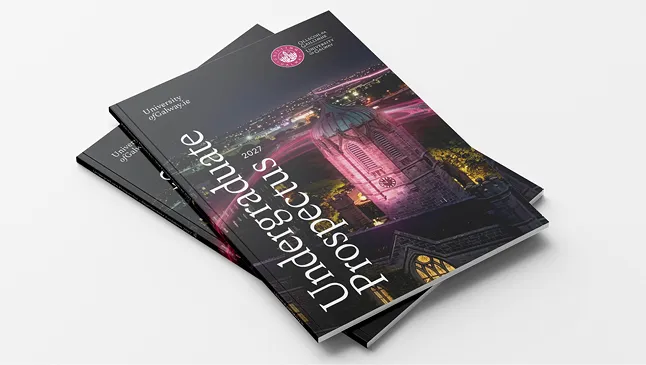
The Master of Engineering (ME) at University of Galway is a one-year, full-time programme for graduates in Electronic & Computer Engineering or related fields. Part of an accredited 4+1 pathway, it develops advanced, industry-focused skills and meets the educational requirements for Chartered Engineer status, preparing you for leadership roles in engineering.
Electronic & Computer Engineering Brochure